
10.16.2025
Optimizing Running Technique for Curved Outdoor Trails
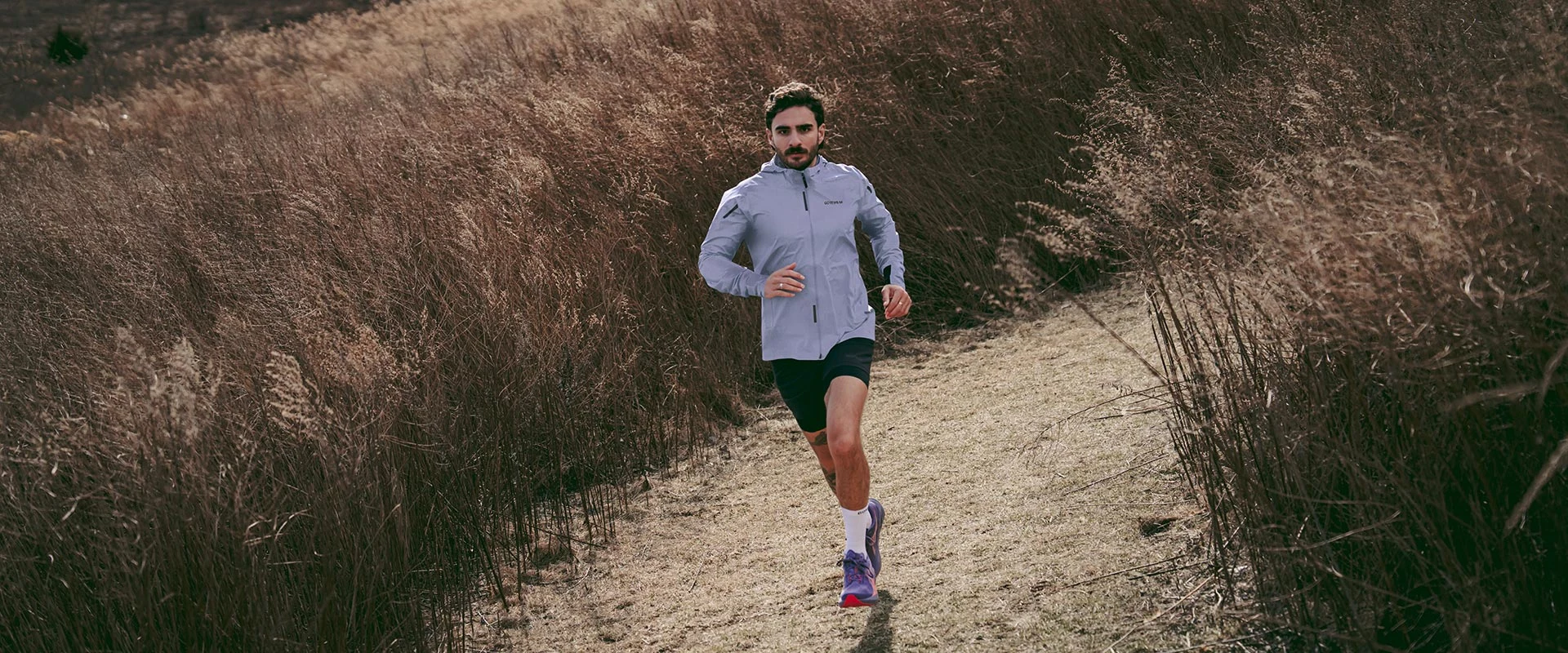
Curved trail runs don’t care about your pace. Complex, winding paths demand precision, control, and a body that moves with purpose. It’s about flowing with the turns, not fighting them. From dialed-in footwork to arm swings and sharp focus, we’ll cover all the techniques that go into smooth running on any track.
Key takeaways at a glance:
Mastering the curved trail running technique is crucial for speed and injury prevention on varied terrain
Small adjustments can improve confidence on winding trails, making conquering trails more enjoyable
Training for curved runs (like curved running drills) has off-the-trail benefits, like better balance, fitness, and focus
Why are Curves in the Trail Tough?
Curves expose any weakness in your running form. They are deceptively tough, even for experienced runners. Here’s why:
On straight paths, your momentum powers you forward. On winding trails, especially sharp or uneven terrain, your body wants to keep going forward - it resists the change in direction. That’s where the challenge comes in.
On a right-hand curve: Your momentum pulls you left — away from the curve.
On a left-hand curve: Your momentum pulls you right — again, away from the curve.
In short: your body wants to ‘fly off’ the outside of the curve. Your job is to resist.
It’s hard enough to do this on a flat trail that curves. You have to lightly lean into the turn, especially at higher speeds. But on trails that slope — or feature loose rocks — your ankles and knees must put in a shift to avoid slips.
On a curve, your footstrike angle even changes, which reduces the amount of contact you have with the trail surface — especially at speed. This can cause you to overuse certain muscles.
Finally, curves are disruptive. They limit your line of sight, so you can’t see obstacles (roots, rocks, dips) until the last second. Twists and turns also break your running cadence. And you can lose energy ‘fighting’ the terrain, if you’re not sure how to adjust for curves.
“Some athletes just run the bend and don’t think about curve mechanics, but I find it helps me run as smoothly and quickly as possible.” 200m athlete, Jeneba Tarmoh.
Mastering Curved Trails
Curves aren’t just obstacles. Here’s how to start seeing them as technical opportunities. Alter your form and start to embrace inclines, curves, and bumps in the trail like a pro.
Body Lean: Controlled, Not Collapsed
Lean with the curve from the ankles and hips, not your waist. Hinging forward from the waist throws off your center of gravity. Instead, channel a skier's posture: upright, slightly forward, and angle into the turn. This counteracts your body’s natural want to pull away from the curve, so you can keep control and flow.
An Arm Swing for Counterbalance
Your arms aren’t just along for the ride — they’re your stabilizers. Through curves, your inside arm should stay compact, while the outside arm swings slightly wider to balance you.
Eyes Scan the Natural Arc of the Curve
Where your eyes go, your body follows. So, look to where the trail starts to exit the curve to help your brain anticipate what’s coming.
Stride Adjustment: Compact & Quick
Running curves, your regular stride can work against you. Shorten it slightly and increase your cadence to maintain control. This allows quicker footwork, reduces overstriding, and minimizes the risk of slipping or overloading your joints on uneven ground. That said, don’t be afraid to widen your stance for stability. Meanwhile, keep your feet under your hips to stay reactive and keep your knees and ankles from rotating out.
Footwork & Agility: Precision over Power
When the terrain tightens or traction drops, clean, deliberate foot placement becomes your best defense. Use shorter, quicker steps, especially on off-camber or slick sections.
Precision footwork and efficient form demand the right support. Lightweight, breathable running layers give you freedom to move without restriction, so your body can focus on the trail (and its curves).
Training for the Turns: Drills and Exercises
You can’t just think your way through curves — you’ve got to train for them. Sharp cornering, shifting terrain, and off-camber (sloping) trails demand strength and experience. Here’s how to build the kind of control and coordination that makes curved trail running second nature.
Curved Running Drills for Smoother Footwork
Try these drills to fine-tune your lean, footing, and rhythm when turning:
Cone Drills: Set up cones in staggered patterns and practice running tight circles or weaving between them at pace
Figure-Eights: Pick out two clear markers and run figure eights around them. This builds balance and teaches your body how to quickly shift between left and right turns
The goal? Teach your body to move fluidly through curves without overcorrecting or braking.
Curved Running Drills for Strength and Stability
Curving your way around a trail starts with a body that’s been conditioned for the sport. Here are some drills to target the stabilizer muscles and help drive powerful movement:
Core work (plank holds with arm or leg reaches, ‘dead bug’ leg raises on the floor )
Hip strength (stepping side-to-side while wearing a resistance band, single-leg glute bridges)
Ankle stability (single-leg balance drills, calf raises on unstable surfaces)
Don’t just train for power — train for control. Curves expose weakness fast.
Curved Running Drills for Balance and Responsiveness
Running curved trails means constant micro-adjustments to stay stable and upright. To improve your body’s reaction times and micro-movements, try:
Balance board or exercise ball work outs
Eyes-closed single-leg drills — test yourself on these when waiting in line or brushing your teeth to make them a habit
Trail-specific agility ladders on uneven surfaces
The better your brain-body connection, the less energy you’ll waste correcting your moves and the lower the risk of injury.
The Real Deal: Time on the Trail
Take the time to train on the trail. It doesn’t have to be a distance run:
Use open spaces, parks, switchbacks, forest loops, or any other paths near you with twists and turns
Run intervals on winding paths to practice taking curves at speed
Vary terrain types (mud, gravel, roots) to prepare for unpredictable footing out on the trail
Gear up for the Gnarliest Curves
Get set to take on all the kinks in the road. Here’s how the right clothing and apparel makes a difference:
Breathability & Comfort: Maintain a comfortable temperature, starting with the base layer, so you can navigate turns with no distractions.
Flexibility & Freedom of Movement: Fabrics that allow you to move and breathe while running curves on the trail are key. Look for sweat-wicking shirts, comfortable running shorts and tights, and layer up to keep warm.
Weather Protection: GORE-TEX and WINDSTOPPER technologies keep runners comfortable and focused, regardless of the conditions the trail throws.
Embracing the Bends
Some days running feels natural, freeing, and fluid. The ‘flow state’ emerges out of thin air. Other days it’s stop-start, harder to get going. Remember to stay present and aware of the trail ahead. Building mental resilience and running curves at pace takes time.
Practice the proper running form for bends on the trail, carve out time for drills, and the rewards — you guessed it — are just around the corner!
FAQs: Training for Turns on the Trail
Still got questions about curved running and how it could help you? Discover frequently asked questions….
How to curve while running? Curving while running — whether on a track, trail, or during another sport — involves balance, technique, and proper body mechanics. Lean into the direction of the curve, shorten your stride, distribute weight as evenly as possible and get the arms involved for further control. Be sure to look ahead, along the curve and to where it starts to straighten out again. This helps your body naturally follow the curve.
How to not twist your ankle while trail running? If tackling winding trails with incline, a common injury is a twisted ankle. Here’s how best to avoid twisting your ankle while trail running: watch the trail, not your feet, wear shoes with great grip and running socks for extra support, do ankle drills, such as circles and resistance band exercises, calf raises, and one-legged balances and be sure to slow down on the trail if in doubt and take care
Latest Run Insights